
New Haven County Blotter Sources
Connecticut disbanded county government, so no sheriff-run blotter covers New Haven County. The practical move is to search town by town. Hamden offers the strongest official archive. Its Reports, Statistics & Logs page organizes files by year and month, and it keeps Daily Arrest Logs apart from Daily Activity Logs. Waterbury Police Department posts dated items through its Newsroom. New Haven Police Department takes a similar route with its own Press Room. Neither is a complete booking log. A single entry might describe an arrest, a warrant, an investigation, bond, court details, or a supplied image. Each source's own label and date control. The official WPD Newsroom page shows this release-led archive directly.
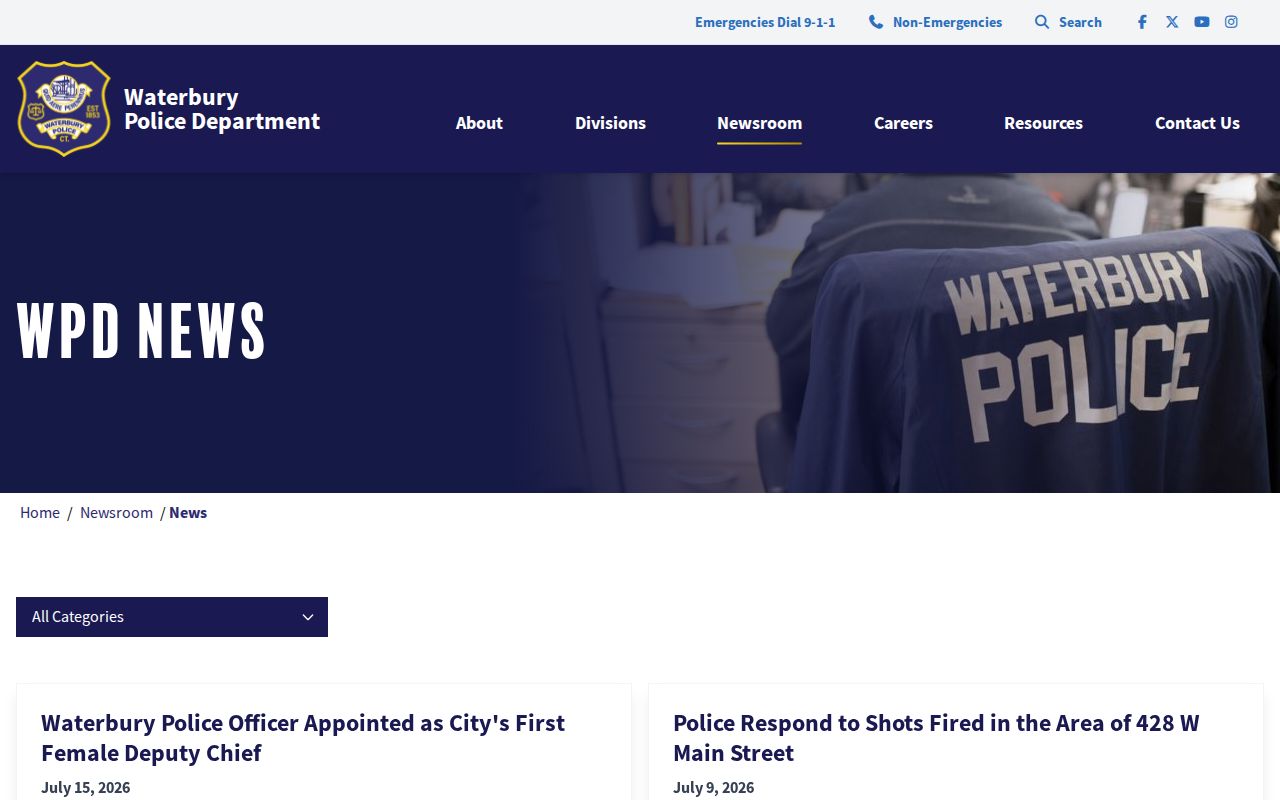
What you see there is a selected newsroom stream, not a complete dated list of every municipal arrest.
Read the New Haven County Blotter
Work backward from where the incident happened. Keep every timestamp so delayed posts slot into place instead of blurring into one fictional roster.
- Choose the municipality. Identify Hamden, Waterbury, New Haven, or another arresting jurisdiction.
- Open its official archive. Use the dated Hamden categories or the city police press page.
- Review several dates. Compare the incident or arrest date with the file upload and release dates.
- Confirm custody separately. Check CT DOC only when the person may have entered state custody.
- Check the court stage. Use the Judicial Branch defendant search for docket events and disposition.
- Request omitted material. Ask the arresting agency for the report when the public window does not reach far enough.
Need something from the past day? The Arrests Last 24 Hours page fits fresh events better, since this blotter view deliberately spans a longer, uneven stretch of time.
What Police Blotter Entries Show
Format depends on who published it. A Hamden PDF, a WPD release, and a news story are different kinds of records, so never assume the fields match.
| Field | Meaning and limit |
|---|---|
| Person's name | Published identity; compare another identifier when names are common. |
| Arrest date | The stated police event, which may predate publication. |
| Release or upload date | When the file reached the public page, not necessarily booking time. |
| Arresting unit | The department or unit named by the source. |
| Charges | Charges at that stage, subject to later amendment or dismissal. |
| Bond and court | Initial details that may change after judicial review. |
| Narrative | Selected incident context, often written from the agency account. |
| Photo | Source-specific; no countywide policy requires one. |
A WPD release can name the suspect, the arresting unit, alleged charges, bond, and court information, add a narrative, or attach a supplied image. Hamden's files take more digging. You have to open the right category or file to see its exact fields. Also, an activity log is not an arrest log.
Weekend Arrest Posts May Arrive Later
No official source promises weekend or holiday publication for New Haven County. Hamden's companion activity files show why batches matter. Files dated December 1 through December 21, 2025 all carried the same December 22 upload time. Event dates and publication dates can drift apart. That one pattern guarantees nothing about future uploads. WPD and NHPD releases move on incident importance and communications review rather than any daily completeness rule. A major case may draw a same-day statement. Routine arrests often get no release at all. After a holiday, several dated items can surface together, so check back, review adjacent dates, and file a records request when confirmation cannot wait.
Local Arrest News Adds Context
News coverage widens the multi-day picture. It helps most when an arrest follows a warrant, a court filing, or a later agency update. A story can land days behind the event. The CT Insider Waterbury hub runs event-driven stories that often cite Waterbury police and may state a bond or court date. The New Haven Register's Waterbury stream covers the same beat. Its timing varies and access can be limited. WFSB and NBC Connecticut tend to focus on major incidents across the state rather than routine bookings. Treat these as discovery sources, not rosters. Photos carry their own warnings. An image might be a police-supplied defendant photo, a scene shot, an evidence picture, or a file photo, so read the caption. Strong reporting names its origin, whether a police release, an arrest warrant, a court filing, or a named official. Verify against those originating records. The CT Insider Waterbury page itself shows the rolling, story-based format rather than any date-complete arrest list.

News value drives the order here. These outlets organize selected stories rather than every municipal booking, which is why they belong after the official logs.
Older New Haven County Arrest Records
A webpage rolling off does not destroy the record. Connecticut State Library schedule M7 treats storage and web publication as separate questions. M7-450 handles no-death case investigations. It generally schedules those records for ten years from the reported date. M7-550 covers identification records, including fingerprints and mug shots, for the life of the case file. DPS retains them for 80 years under that note. None of that promises public access or continuous online display. For an older arrest, identify the agency and the approximate date. Search its current archive and the Judicial Branch docket. Then submit a focused records request. Ask about the record series and its disposition if the agency no longer holds the material. Contact the State Archives only after an agency confirms a transfer. A finding aid pointing there also qualifies. Historical prison indexes are not booking databases.
Note: Retention governs how long an agency keeps material, while disclosure still depends on Connecticut law, exemptions, sealing, and erasure.
Blotter Records and Current Custody
A blotter entry marks one thing only: an arrest happened in Waterbury. It says nothing about where the person sits today. Bond may have been posted. Custody may have shifted to state prison after court, or a transfer between facilities may have quietly moved the person elsewhere. For a live answer on state custody, the CT DOC Inmate Information locator covers that question directly.
| Source | Best question |
|---|---|
| Municipal blotter | What did the arresting police department publish? |
| CT DOC locator | Is the person now in Connecticut state custody? |
| Judicial Branch docket | What happened later in the criminal case? |
| Agency records unit | Can the official arrest or incident report be obtained? |
One caution about that state system. A CT DOC listing can hold people who are accused, unsentenced, or already sentenced, so it mixes statuses. When a name comes back empty, the cause might be a municipal release, a search that missed, records the system excludes, or custody held somewhere else entirely.
Photos and Allegations in Blotters
New Haven County keeps no shared booking-photo archive. Waterbury police and news outlets will sometimes release a police-supplied image, though practice varies. Hamden handles photos one way. NHPD handles them another. The docket, not the photo, tracks what happens next in a case. So read the wording around any blotter item with care. Phrases like "police say" reflect what an agency claims. "According to the warrant" points to a filed document rather than a settled fact. Protected victims, youthful-offender material, sealed files, and erased records all carry legal limits. A careful blotter search respects them.